
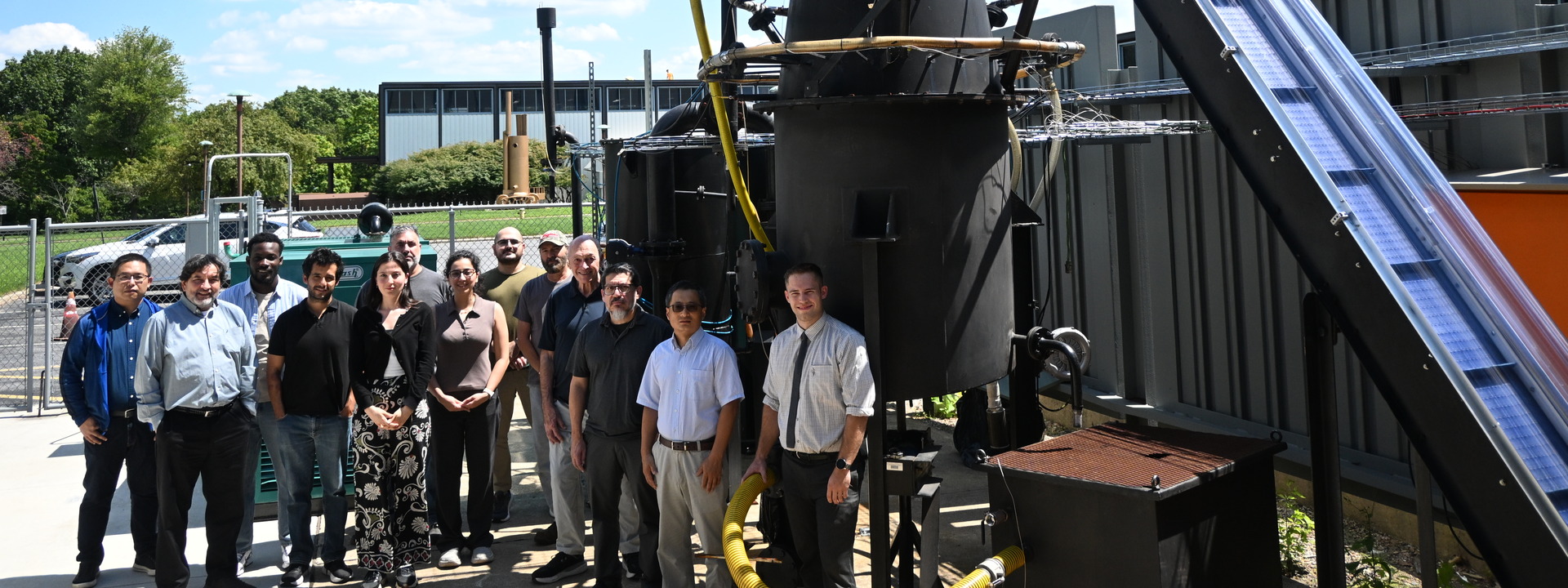
The Energy Research Center (ERC) is building a gasification facility at Lehigh University’s Mountaintop campus. As part of this facility, a pilot-scale gasifier was commissioned in early July 2026. “The unit processes 100 kilowatts of thermal energy and can generate 40 kilowatts of electricity,” says Carlos Romero, Director of the ERC, co-Associate Director of Lehigh’s Institute for Cyber Physical Infrastructure and Energy (I-CPIE), and Professor of Mechanical Engineering and Mechanics at Lehigh.
The commissioning process establishes the gasifier’s suitability for continued operation, and it includes start-up, shake-down, and a first round of testing. The ERC hired an outside engineering firm to assist with the design, fabrication, and commissioning of the gasifier system. An emissions permit was filed and obtained from the Commonwealth of Pennsylvania.
With its commissioning, the gasifier became available for use by researchers at the ERC, across Lehigh, other universities, and industry partners. Lehigh is now one of just a few universities in the United States with a pilot-scale gasifier on its campus. This gasifier was built under funding by the U.S. Department of Energy (DOE) Bioenergy Technology Office (BETO), which has been renamed the Alternative Fuels and Feedstocks Office (AFFO), and through additional funding from the Pennsylvania Infrastructure Technology Alliance (PITA) program. The ERC has already developed several funding proposals around the new system and is planning several more for submission to agencies such as the DOE and the USDA (U.S. Department of Agriculture).
Gasification technology comes in three types: entrained flow, fluidized bed, and moving bed. Lehigh’s design, which looks like a metal cylinder standing on one end, is of the third type. A conveyor belt feed system feeds the gasifier feedstock. Zheng Yao, ERC’s Associate Director, describes how the gasifier works: “Once you load the material in the tower, you start gasifying, then as the material is consumed, you load again, and keep doing that repeatedly to produce a syngas [synthetic gas].”
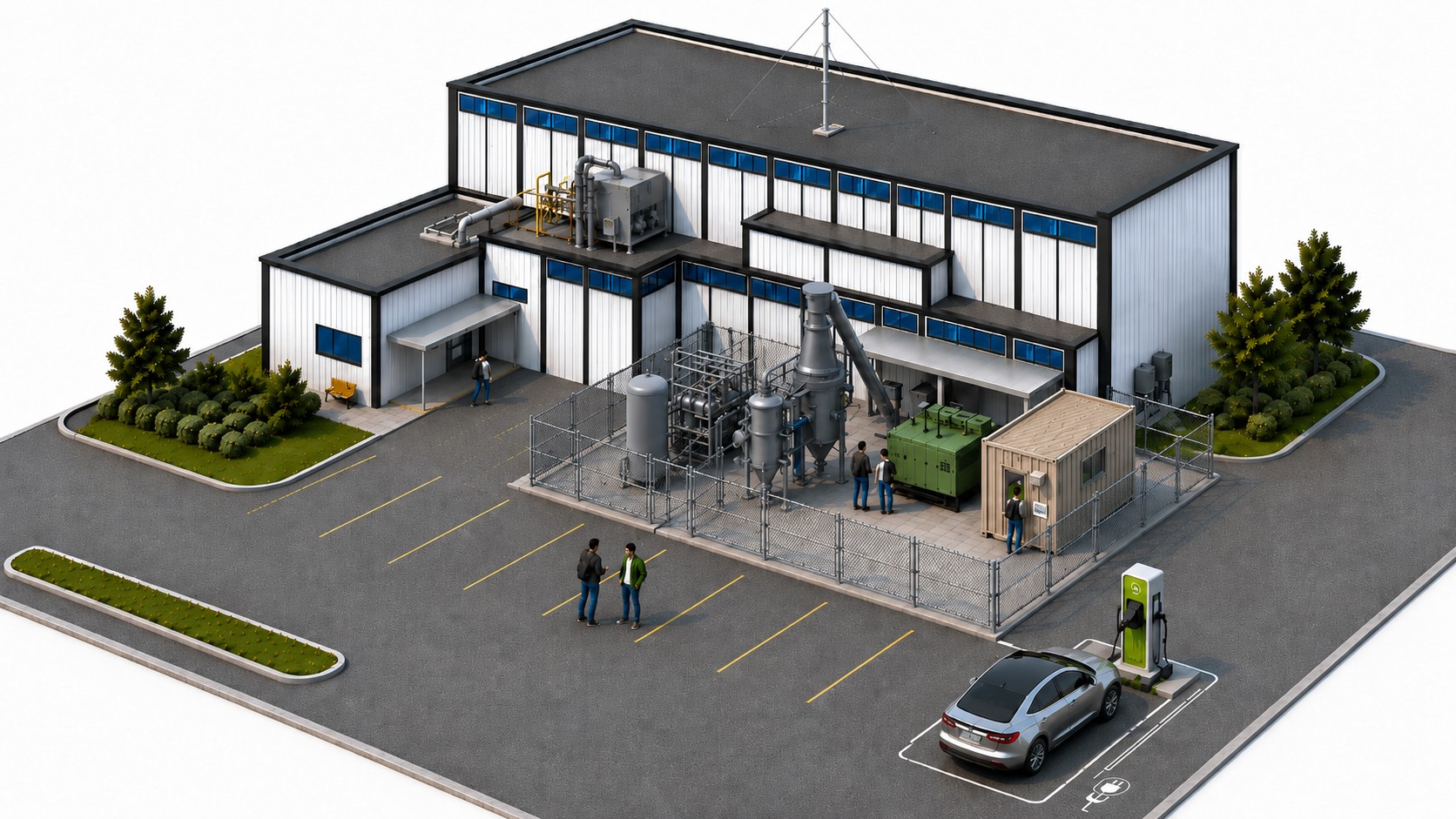
Feedstocks for the Lehigh design can include a number of fuels including RDF (refuse-derived fuel), a valuable fuel product made by sorting, shredding, drying, and cleaning MSW (municipal solid waste), waste biomass, waste plastics, and coal refuse. Waste coal presents a particular problem for coal-mining areas in Pennsylvania, as waste coal can pile up–there are billions of tons of this waste in the region, Romero says–and leach contaminants into the groundwater via rainfall. Using this waste to produce syngas would be a win on two fronts, producing energy and mitigating environmental harm.
The ERC’s gasifier produces a synthetic gas, or syngas, with a gas composition that includes carbon monoxide, hydrogen, and methane. The syngas goes through three cleaning stages, including particulate cleaning, wet scrubbers, and dry scrubbers. The gas is monitored during the process from the facility’s onsite control room. Gas chromatography determines the composition of gas in real time.
The new system is also fitted with a programmable logic controller (PLC), HMI (human-machine interface), data acquisition system (DAS), and cameras. It is unique in that it is equipped with a machine learning (ML)-enhanced laser induced breakdown spectroscopy (LIBS) system, jointly developed by the Energy Research Company (ERCo) and the ERC, that allows for full characterization of feedstock properties in real time. This novelty allows the gasifier to be optimized in terms of syngas yield and quality to compensate for the variability in feedstock composition, especially for fuels that are inherently heterogeneous. Additionally, the gasifier facility includes an internal compression engine to produce electricity out of the syngas produced.
The construction of the gasifier was assisted by the Advanced Technology for Large Structural Systems (ATLSS) Engineering Research Center at Lehigh University. Project stakeholders include Recor, an industrial manufacturing company in South Africa; the National Energy Technology Laboratory (NETL); SpG, a consulting company in the waste-to-energy space; University of Toledo; and ThermoChem Recovery International, Inc.