
Intro
The 10-week summer research program for undergraduates, STEM-SI, concluded on Thursday, July 30, with the annual undergraduate researcher Summer Research Expo. STEM-SI students joined other summer research program participants in presenting posters outlining their topics, methodologies, and conclusions, and honing their oral presentation skills by talking to judges who scored them on various rubrics. The day concluded with awards and ice cream.
Here’s a glimpse of a few Research Day projects–and a list of the winning presentations.
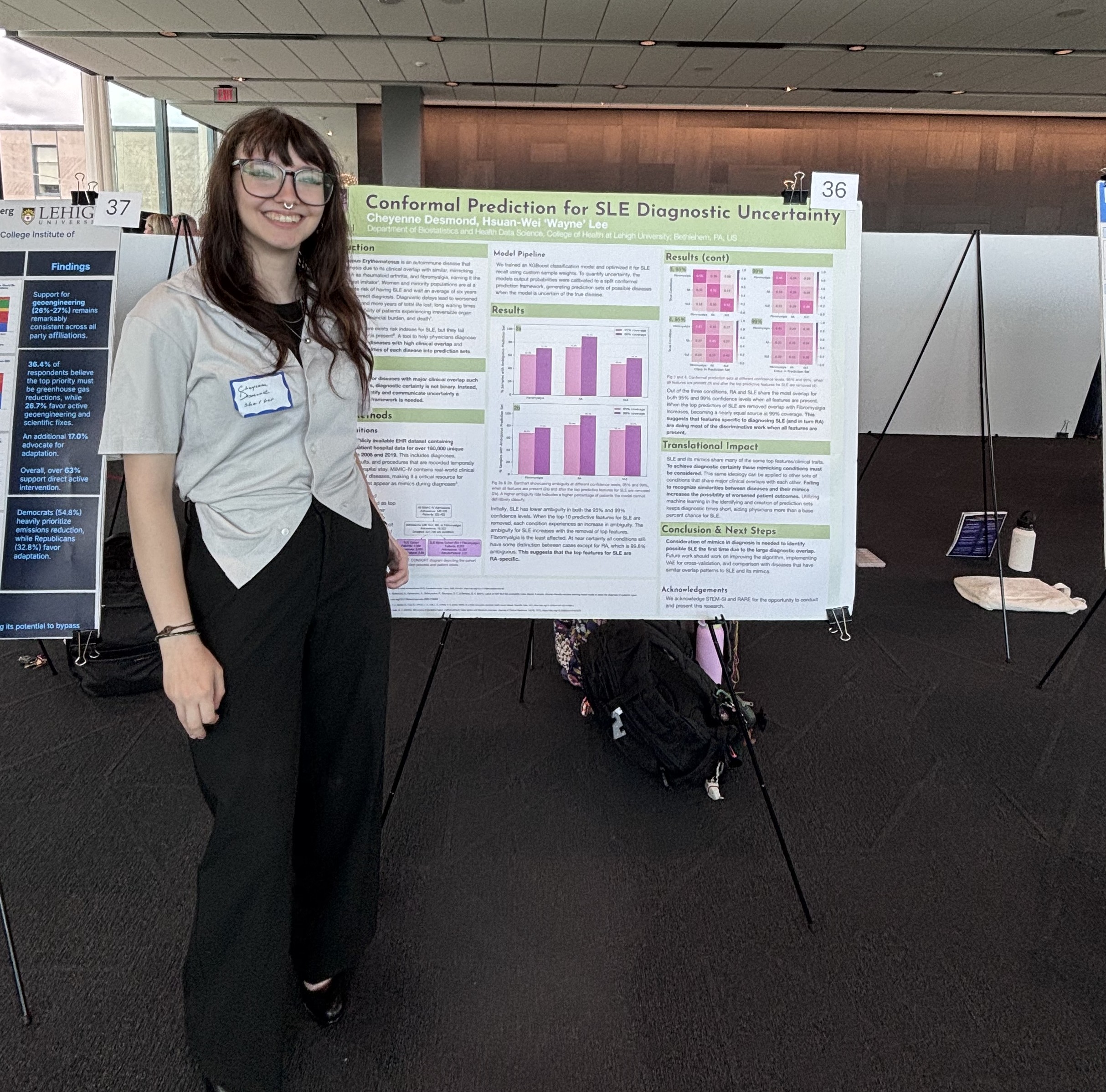
Cheyenne Desmond, Biostatistics major with double minors in Data Science and Probability, rising junior, Lehigh University
Mentor: Hsuan-Wei “Wayne” Lee, College of Health
Project: Creating a risk index for systemic lupus erythematosus, an autoimmune disease that you might have heard about if you watch medical dramas. It mainly affects women and minority populations. Patients don't typically receive the correct diagnosis until six years after the disease first starts. Since lupus eventually will cause organ failure if it's left untreated, it needs to be treated quicker than six years. People have tried to make risk indexes for lupus, but they fail whenever there’s any uncertainty present in the diagnosis, which is often with lupus. A correct diagnosis needs to take into account the mimicking diseases, such as rheumatoid arthritis and fibromyalgia. We are using a publicly available data set to create an index to help physicians diagnose the disease. The index shows the probability of a patient having one of these diseases, to make the diagnosis happen a little faster.
What surprised you during the research project?
I've never worked with an actual clinical electronic health record-based data set before. I knew there would be some extra steps to get all the ethics clearances. This is my first project that was pretty much entirely on me, where I'm doing all of it and the professor's just there to make suggestions. It took three or four weeks just to get access to the data set because I had to go through clearance after clearance after clearance just to prove that I wasn't going to try to de-identify patients or do anything wrong with the data. And I had to go through a bunch of training.
What would you say was the most satisfying part of the process?
Of course, seeing the results!. It was a really good project, I think, to have as my first time doing something alone because it had so many challenges on the way. I had to make the model completely myself, all the coding completely myself. I'm writing the paper mostly by myself. And so it's just really satisfying to start seeing it all come together.
What will you remember about this summer in 10 years or so?
Persistence. I think keeping at it, because some days it’s harder than others. And I have a job and two other research gigs on top of this.
Future plans?
Last summer, I was working with another biostatistics professor, Dr. McAndrew. And I am still on that research project, working on pathogen spread. We’re writing the paper for that now. I also do research under Dr. Amy Johnson, who just went to a different university, looking at how people on Reddit use language in mental health self-diagnosis compared to professional diagnoses. I absolutely love research. Doing these projects solidified that I want to get my PhD. I want to keep doing it.
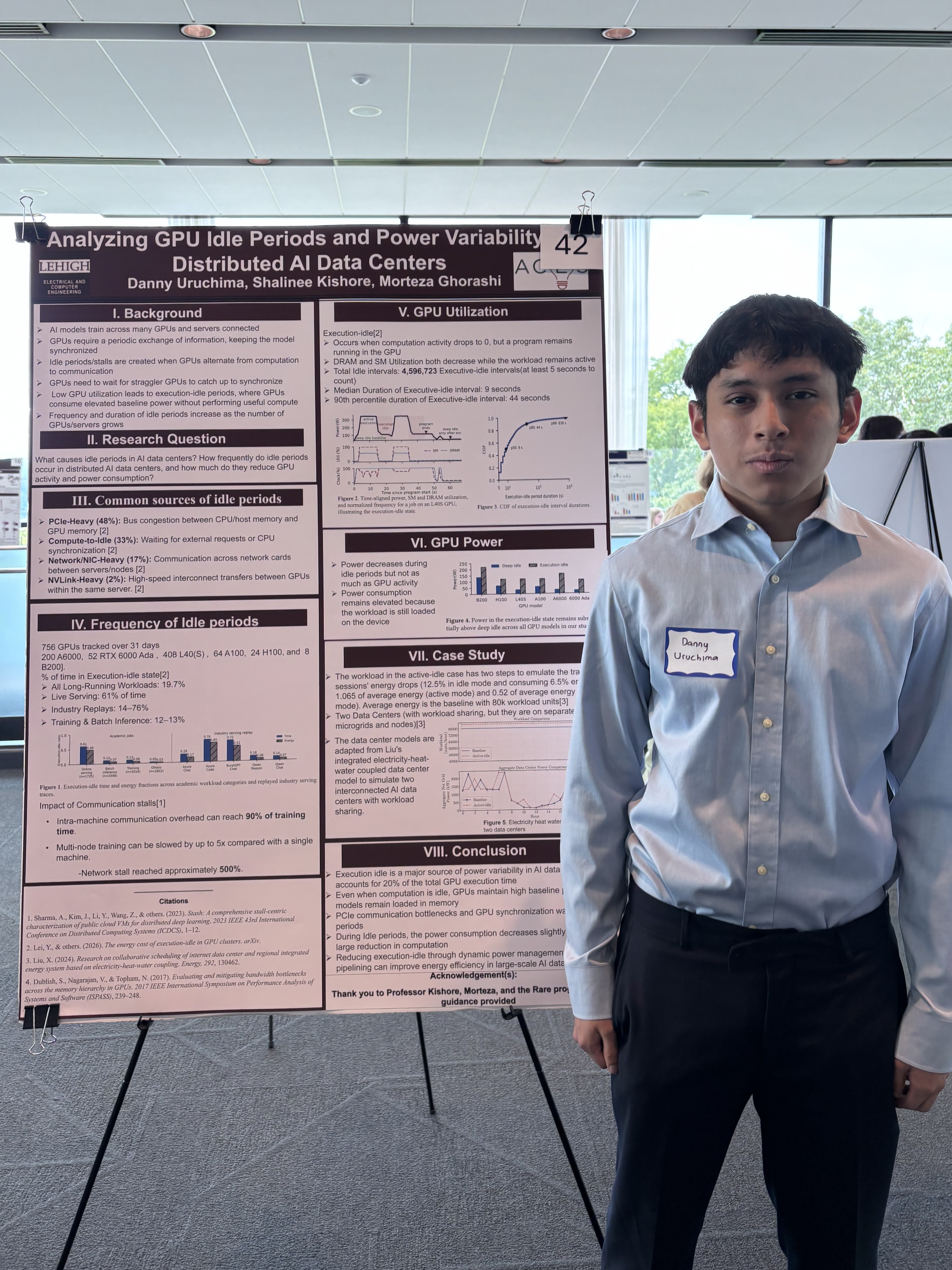
Danny Uruchima, Electrical and Computer Engineering, rising sophomore, Lehigh University
Mentors, Shalinee Kishore and Mortza Ghorashi, Electrical and Computer Engineering
Project: I looked into what causes idle periods in distributed AI data centers. AI models need a lot of GPUs to train on, and a larger number of GPUs causes the data center to need more communication between the GPUs. Basically I analyzed what causes these idle periods and how they affect the power consumption and utilization. The high idle periods are because the CPU is transferring the data to the GPU, and it’s a slow process. A lot of time is spent waiting for the CPU to send the data in. Then it’s waiting for more data. It's saying, “when can we synchronize?” That's like 33% of the idle time.
What can be addressed?
Idle time creates a lot of power variability in AI data centers, up to 20% of the total GPU execution time. There may be fixes that can prevent losing power to idle time. You can improve energy efficiency by managing the power dynamically and by improving the energy pipeline to the data centers. Improving the efficiency of the grid will make more energy available to everyone.
Next Research Steps
For the next steps, I want to actually find solutions. I looked at the problem here, and I want to work toward the solutions, seeing how to make data centers better, basically. One project is making a forecast tool to see how the electricity price affects certain areas.
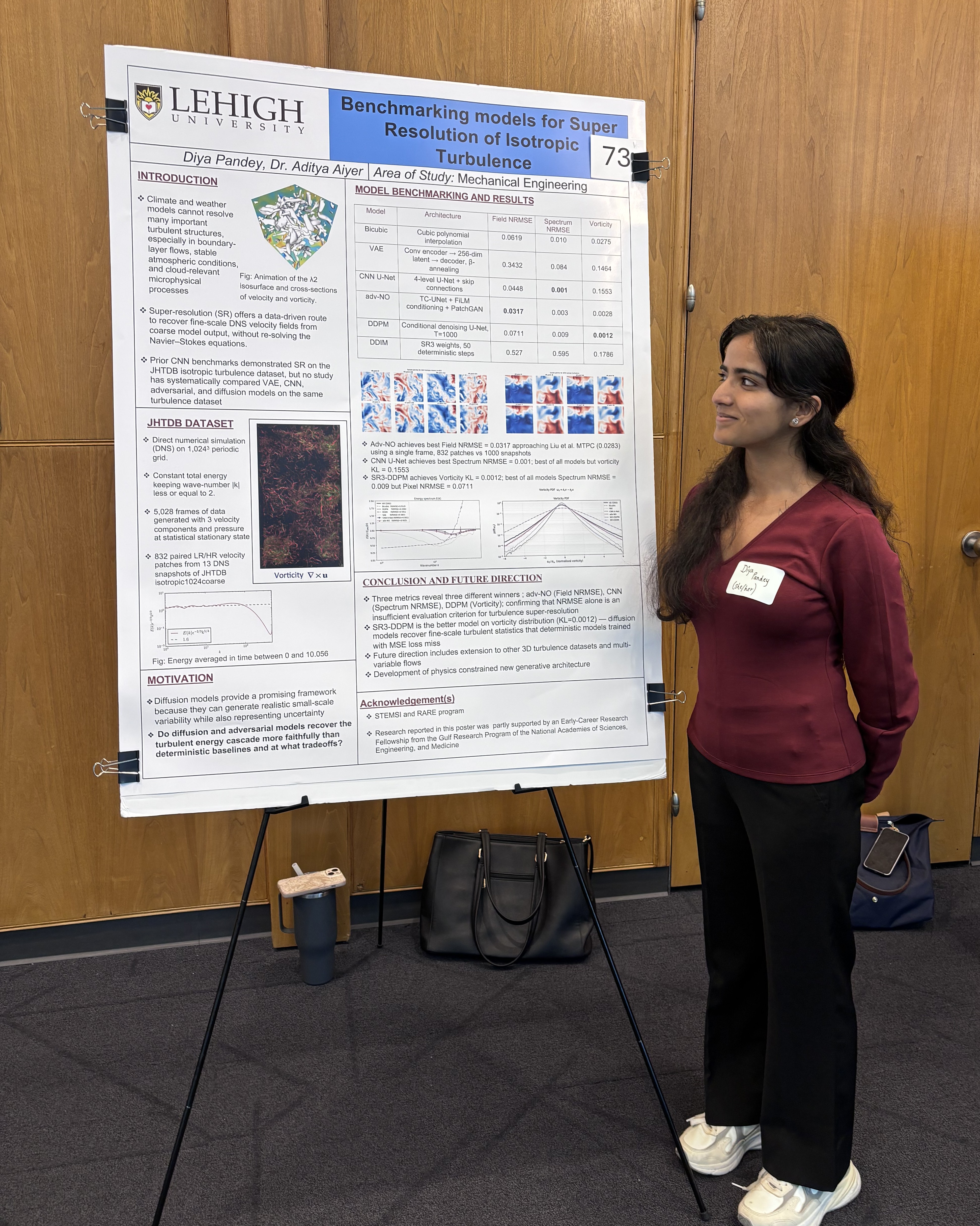
Diya Pandey, Computer Science, rising senior, Lehigh University
Mentor: Aditya Aiyer, Mechanical Engineering and Mechanics
Project: This research focuses on benchmarking models for resolving fine-scale turbulent structures from coarse-resolution atmospheric data. Existing climate models can’t resolve many significant turbulent structures. There’s a lot of underlying physics that those models are not able to interpret properly. This research focuses on a new approach, which doesn’t heavily rely on mathematical equations, like, for example, the Navier-Stokes equation, which is computation heavy. So there are prior CNN [convolutional neural network] benchmarks that we have done similar research on previously, but it doesn’t compare all of the diffusion models. Each model comes with trade-offs in how it's able to actually evaluate those matrices. The main motivation is to identify if the model, like diffusion models, will be able to look at the turbulent energy cascade properly, or not.
We want to be able to identify which models perform better, especially because turbulence data structures are very random. Diffusion models proved to be much better. Inference training is an iterative process so there’s a lot of computational cost, so one other future direction was a middle ground between an adversarial neutral network and the DDP (Distributed/Depth Dependent) vorticity distribution model.
What’s a real-world example that you can apply this idea to?
When we look at the atmosphere outside, it is turbulent–the wind, like air speed, like above an aircraft, it’s turbulent everywhere. So when we have models that are able to capture those matrices very well, we are able to model and do the weather forecasting better. Those models can be used for other fields, but with atmospheric data, it's able to calculate tornado events, the cloud formation process. They are able to give more clear understanding and help us to understand and be more prepared ahead of time in those situations.
What was the most satisfying part of your project?
That I was able to compute a lot of these models. I wanted to test diffusion models, generative models, different architectures, so I was able to test all of them, so that was very satisfying, and it was also a new area for me.
Sometimes you need to adapt to a different field [she is in computer science and her mentor in mechanical engineering], and it helped me a lot to understand what it was like working with this data, so I think that was very satisfying. It's a very different resource field from software engineering, and I'm also thinking maybe I want to get a master’s degree after this, so it just helps me to know, do I enjoy this?
What will you remember in 10 years about this summer of research?
A new thing I learned is diffusion models. I never knew anything about that before, so I think every time I'm learning something about diffusion models I will remember this because this was the first time I learned it.
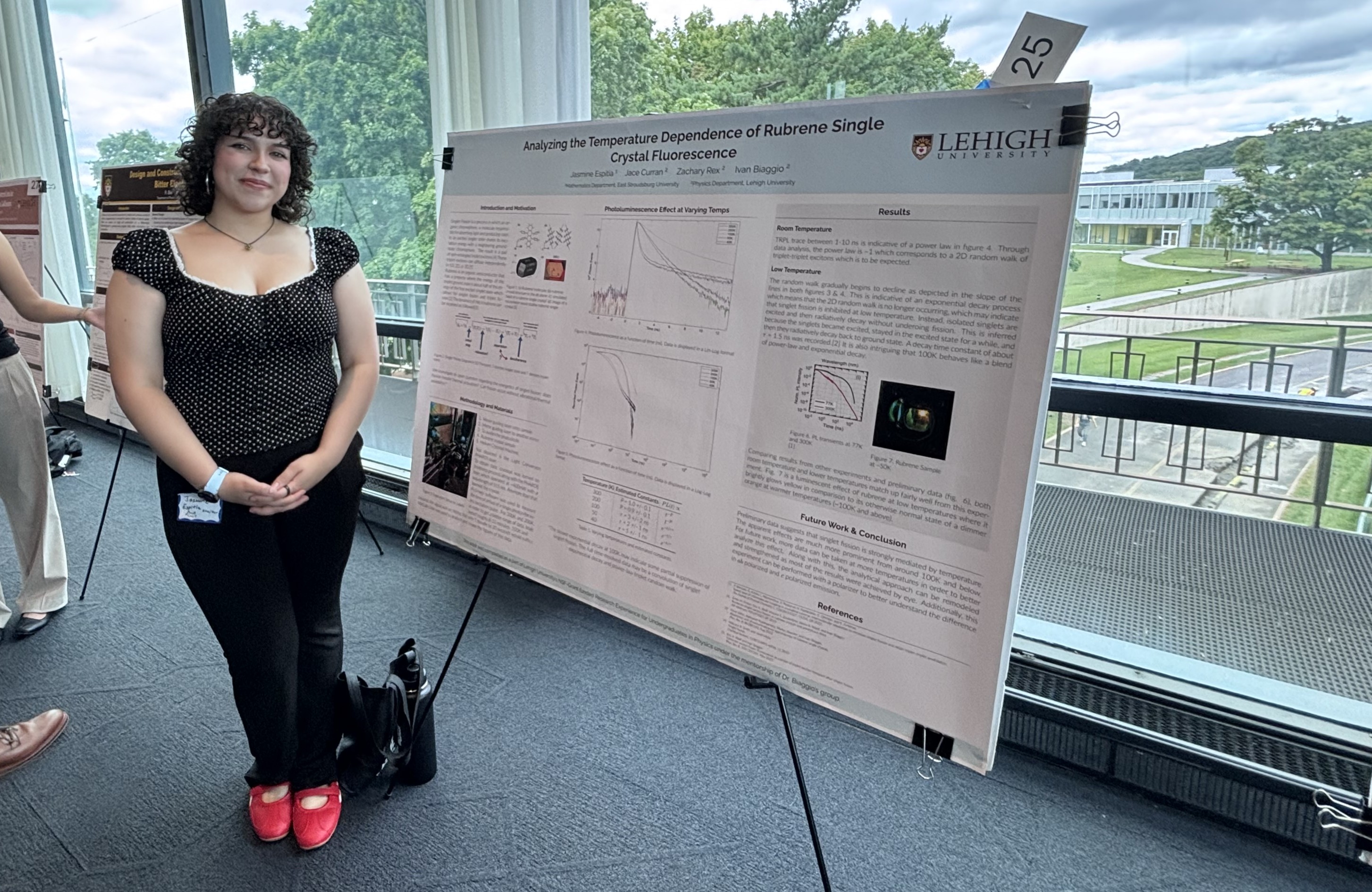
Jasmine Espitia, Mathematics major with a minor in Physics, rising senior, East Stroudsburg University
Mentor: Ivan Biaggio, Physics
Project: My specific project was looking at rubrene single crystal fluorescence in varying temperatures to see if this process is actually thermally activated or if it needs any sort of thermal or vibrational activity. The choice for the crystal that we use is rubrene. Rubrene has a very unique characteristic that allows for single vision to occur within it.
What was your motivating question for the project?
I wanted to find out if the model holds true for other temperatures, specifically lower temperatures. There are a lot of theories and results about what happens at higher temperatures, but because of the instrumentation that we had and overall just the scope of my work and also what my grad student mentors expected of me, we decided to go to lower temperatures. I found it to be really interesting as there wasn’t much indication of what’s going on for specific temperatures.There has been research before for maybe one or two given temperatures, but not in a range.
What might be a real-world application for this work?
One application would be quantum communication, because we can use these crystals to start sending signals, because of the fact that they hold true with a lot of the same parameters. You can use it in space for solar panels. We know that this structure and this relationship holds strong and holds true for a limited range of temperatures. So the fact that it can still hold true with its relationship pretty well is pretty substantial.
What was most surprising to you about the research process?
Most of the lab work I’ve done was in my Physics 1 class. I hadn't really worked a lot in a lab environment or just overall experiments, or any sort of independent work. So when I actually got to do this, I overestimated what would happen. I thought, “Oh, it's just instrumentation. It shouldn't take too long.” But this took a long time! And at times I felt like the lab had it out for me because every single time I would test, something would go wrong. But that's the course of research. And that's what I definitely learned from the summer: one, have patience, and two, prepare for the unexpected. I was very new to everything. I had the idea, I had the breadth, I had the theory behind it, but it was really just the applications that I was struggling with, but definitely a really good lesson for the summer.
What was the most satisfying part?
Definitely getting the data and also realizing the really interesting intricacies about this, where I actually don't have as much background in quantum. I haven't taken any quantum class, so this was my first introduction to it, and to the actual intricacies of how everything works and how you have to be so specific with things. I could get really upset when I was doing it and things broke. But looking back, it's really fun to see the alignment, which is something so physical and not as theoretical. With just a slight tweak of the alignment, I could ruin the entire crystal. I like the fact that it was so specific. I'm very much a detail person.
What will you remember about this summer in 10 years?
If anything, it gave me the ability to learn when to have patience, especially because this project needed a lot of patience. And then also the ability to just come back down to earth and be like, “I have to be realistic about this. I can't be overshooting. I can’t be overestimating my results because I wanted to do so much more with the experiment.” I want to do so much, but you can only do so much at a certain time. And 10 weeks is not that long.
What are your future plans?
Graduate school, probably in a mathematical physics program. I’m still at a crossroads between just overall pure mathematics or applied mathematics, but physics still definitely holds my heart, so I'm leaning more toward applied mathematics.
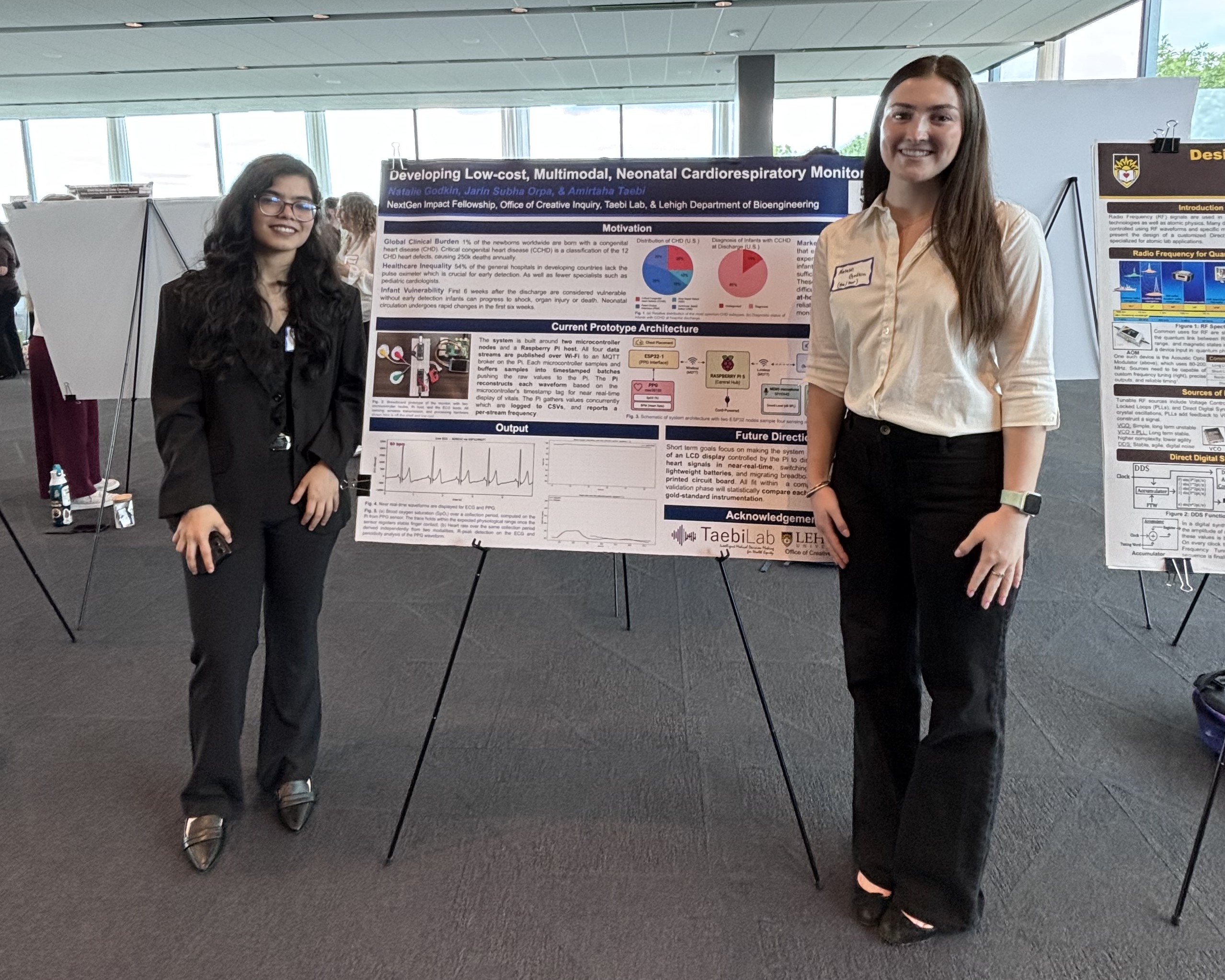
Jarin Subha Orpa, Mechanical Engineering, rising sophomore, Lehigh University
Natalie Godkin, Bioengineering, rising junior, Lehigh University
Mentor: Amirtaha Taebi, Bioengineering
Project: We’re working on a low-cost neonatal cardiorespiratory monitor. Worldwide, 1% of newborns are born with a congenital heart disease and 250,000 deaths are due to critical congenital heart disease, because the disease is not detected as early as possible. And developing countries often lack basic equipment, for instance, 54% of the hospitals in developing countries don't have a pulse oximeter, which can help you detect the pulse and oxygen. So it's very crucial to detect this as fast as possible.
We did market research on products. There are some devices available, but they're expensive, like $1,000, a lot for a developing country. We wanted to make sure that our device is as easy as possible to use and portable and affordable so that everyone can have access to health care.
What was the most challenging part of the research?
Just to get the system running, because you have to order then test the sensors before you use them. Some of the first PPG sensors (photoplethysmography, an optical technique that measures blood volume variations) we had burned out. We had to order more PPGs, and set up the system and get it running and get the perfect data and a time set and all that. It was pretty hard.
[Jarin was joined by partner Natalie here.]
What will you remember about this summer of research in 10 years?
Jarin: I think I would remember working on something that makes an impact and helping communities out there with healthcare, because healthcare should be free, but it's not. So we want to ensure everyone has access to at least basic healthcare. I am proud I was part of this project.
Natalie: We were the first group on this project, the inaugural group in a project that is supposed to be running for many years. We had engineering experience and we understood the science behind it, but setting up the project so it had longevity and organizing everything and knowing, okay, we have to make this from scratch, and having not really any detailed information about it, where for the first few months it was just research, that was hard.
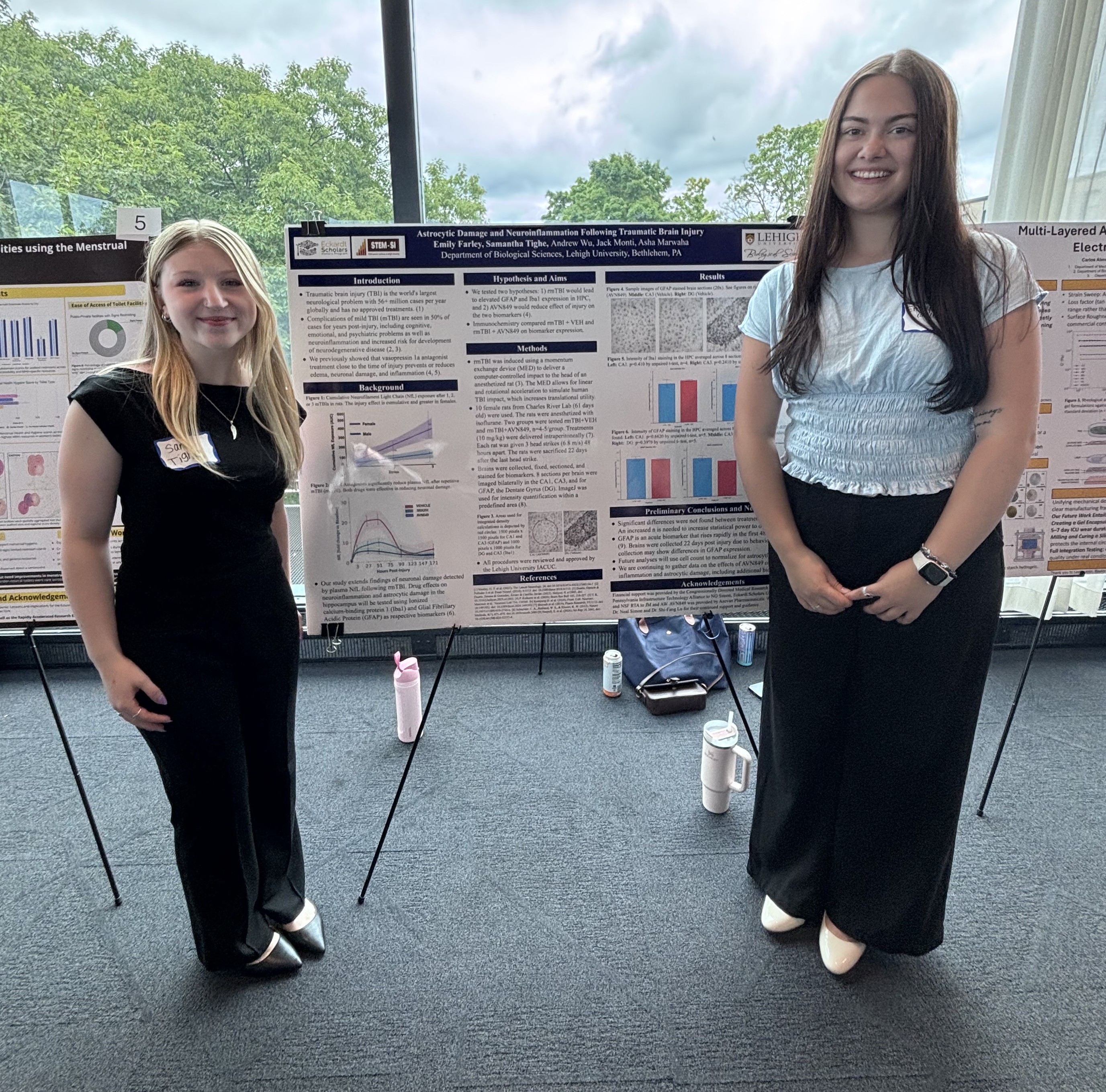
Samantha Tighe, Neuroscience, rising junior, Lehigh University
Emily Farley, Behavioral Neuroscience, rising senior, Lehigh University
Mentor: Neal Simon, Biological Sciences
Project: We work in the Simon Lab–it’s a translational lab. This summer we did work on astrocytic damage and neuroinflammation following a traumatic brain injury.
Sam: Traumatic brain injuries are one of the biggest neurological problems in the world. Many of these are mild, like concussions. And we see symptoms for years post-injury. This is called post-concussion syndrome.These involve cognitive and emotional deficits as well as neuroinflammation. While these are such large issues, there's no approved treatment, so we're aiming to look for a treatment. We use a vasopressin 1a receptor antagonist, and we have found that a plasma biomarker, neurofilament light chain, increases with head strike. And the effect is cumulative and greater in females. But with our drug, we see a significant decrease with treatment in a biomarker for neuronal damage. So we have evidence that our drug can reduce neuronal damage.
So we want to reduce the neuroinflammation as well as the behavioral aspect. So this gives us a picture of the whole brain, and we kind of want to zoom in and see specific regions. We want to look at the hippocampus because of memory deficits that are involved in traumatic brain injury. And we want to look at two types of biomarkers, one for neuroinflammation and one for astrocytic damage, two types of brain damage. And we tested two hypotheses. First, that repetitive mild traumatic brain injury would increase astrocytic damage and neuroinflammation, and thus our biomarkers, and that our drug can act to reduce these biomarkers and this injury effect. So we induce our injuries with a momentum exchange device.
Emily: What that means is we give the animals the treatments, we take very thin sections of their brain, and we stain them with an antibody that detects biomarkers for astrocytic damage or neuroinflammation. So we're able to see the intensity of this damage. Overall, we didn't find any significant differences with the vehicle and the drug groups for either biomarker. However, we only tested a few animals this summer, so we're looking to increase that before making any significant conclusions.
What was your motivating question for this research?
Emily: I think the aspect of translational medicine was one of the biggest things that drew me to this research. I'm looking to go to medical school after my time at Lehigh, so when looking for research projects that interest me, I really like the aspect of how this research is moving toward real human clinical trials.
Sam: I am very interested in neurodegenerative diseases, and while traumatic brain injury isn't exactly that, it has so many ties. And similar to Emily, seeing a translational aspect–we’re developing a real drug, and we can help real people.
What will you remember from this summer of research?
Sam: I feel like working together was a big thing. The way we interact over the summer is a lot different than the way we do for the semester. We're together pretty much all day, every day, working on this. I feel like this summer marks a period that you get a lot more comfortable talking about what you're doing. You talk about it with people, you talk about it literally with everybody.
Emily: Our principal investigator, Dr. Neil Simon, really emphasizes that he doesn't want us to just be research technicians. He wants us to understand. So I think looking back on this experience, I've really learned how to interact with research literature and even doing poster presentations like this helps communicate about it. I've learned the minute details. I know how to explain it to someone of a higher level and a lower level and you just really are interacting with it at every level, becoming a true research scholar.
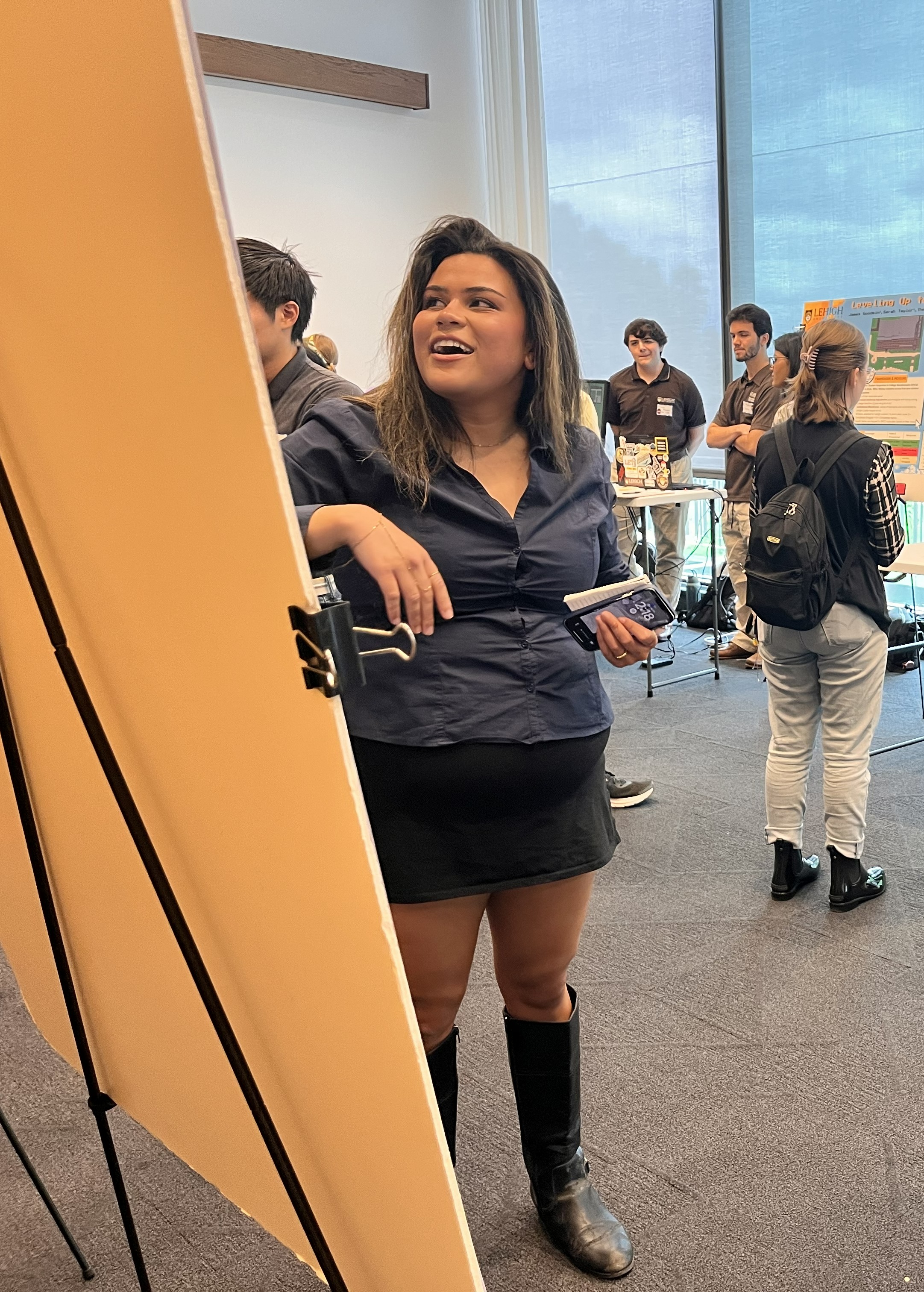
Victoria Delgado, Mechanical Engineering and Mechanics, Aerospace minor, rising senior,
Mentor: Aditya Aiyer
Project: The motivating theme is microplastics in the ocean–basically figuring out how these non-spherical pieces float through the ocean. Where do they go? Where do they collect or kind of bunch up? What is the data that will let us locate it and figure out a way to clean them up? If we can figure out the trajectory of these items, then we can figure out what area of the ocean to look in. If we know the trajectory that the nonspherical plastics will travel in the fluid ocean environment, then we can take steps to create a cleanup around that area.
What was your biggest challenge with this research?
I am not a coder. I am a part of another program called Space Initiative, and there I work a lot with robotics and circuitry, but I have not stepped into anything like the calculus integration within a repeating scheme of time like I have with this project. I definitely became more advanced in Python. I would say the most challenging part has been just understanding what you're given and how to optimize that.
What has been the most satisfying part of your research summer?
I love the symposiums that we do. Sometimes people will bring their brothers and sisters that are still in elementary school. And I really love inspiring that future generation. I really enjoy talking with people who just want to learn more about science. I've been a science geek since I was very tiny. So I just like to talk to other people about what I've done all summer.
What will you remember about this summer?
There's two different things, career and personal. With career, definitely getting more embedded with coding, trying to figure out what's going on–there'll be certain bugs in your code that’ll take hours to figure out, and sometimes you need to reach out for help. That leads into the personal, like reaching out to my PI if I needed help with something. It's like learning that you're not doing this alone, there's many helpers around you, and you can just reach out.
Future Plans
Pursuing my master's in aerospace engineering or space systems.